
Updated 24 November 2026
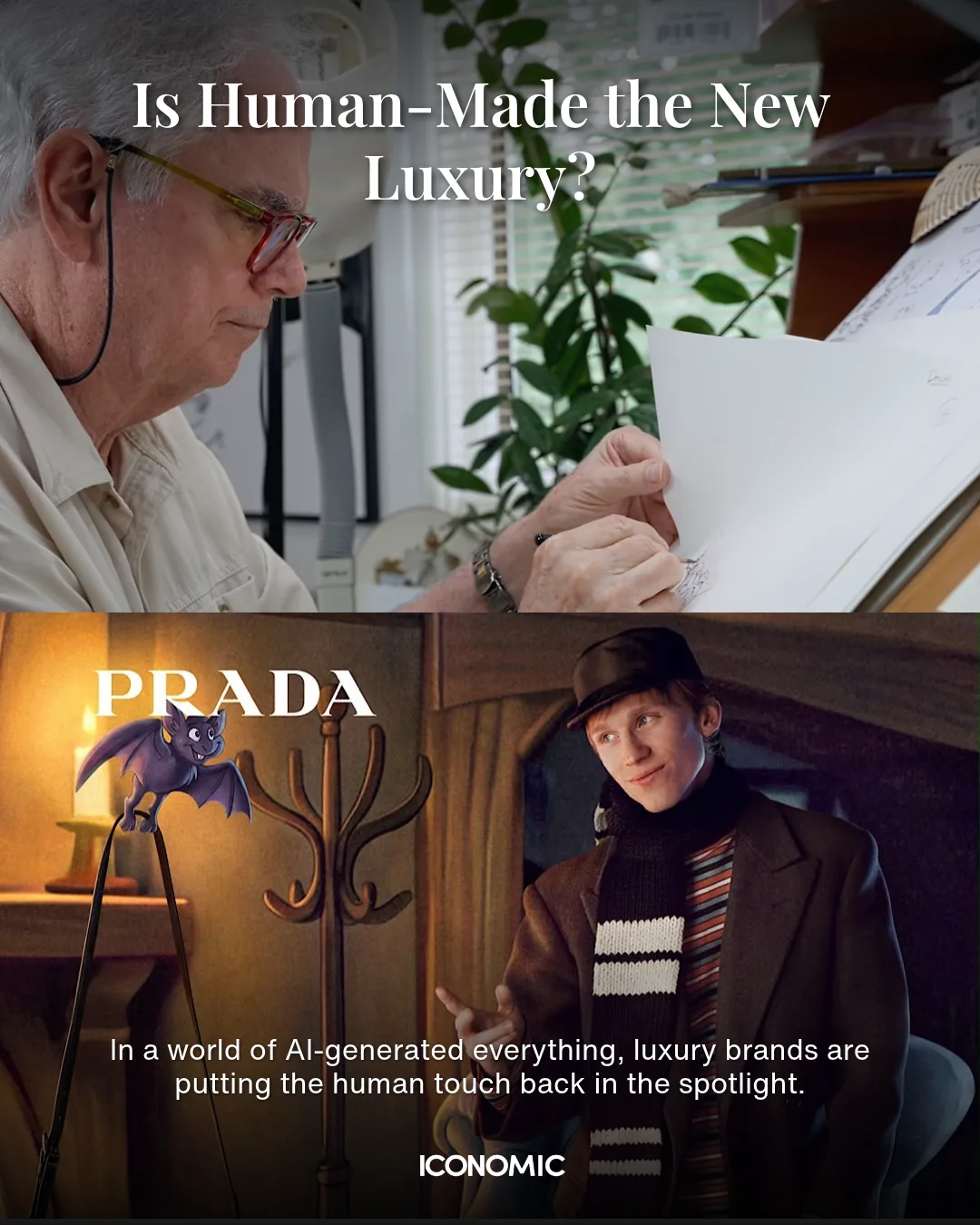
In short: Luxury houses are putting the human hand back in the spotlight. Prada’s Holiday 2026 film was animated by hand under veteran animator John Pomeroy, Hermès illustrated its website with drawings by Linda Merad, and Dior’s animated holiday film was accused online of using AI, which its director denied. Our view: proof of work is the new creative flex.
We are a little tired of being told that faster means better. In a feed full of AI-generated everything, some of the biggest houses are making the opposite bet: slower, drawn by hand and signed by a person. The question is whether that is a value or just the next aesthetic.
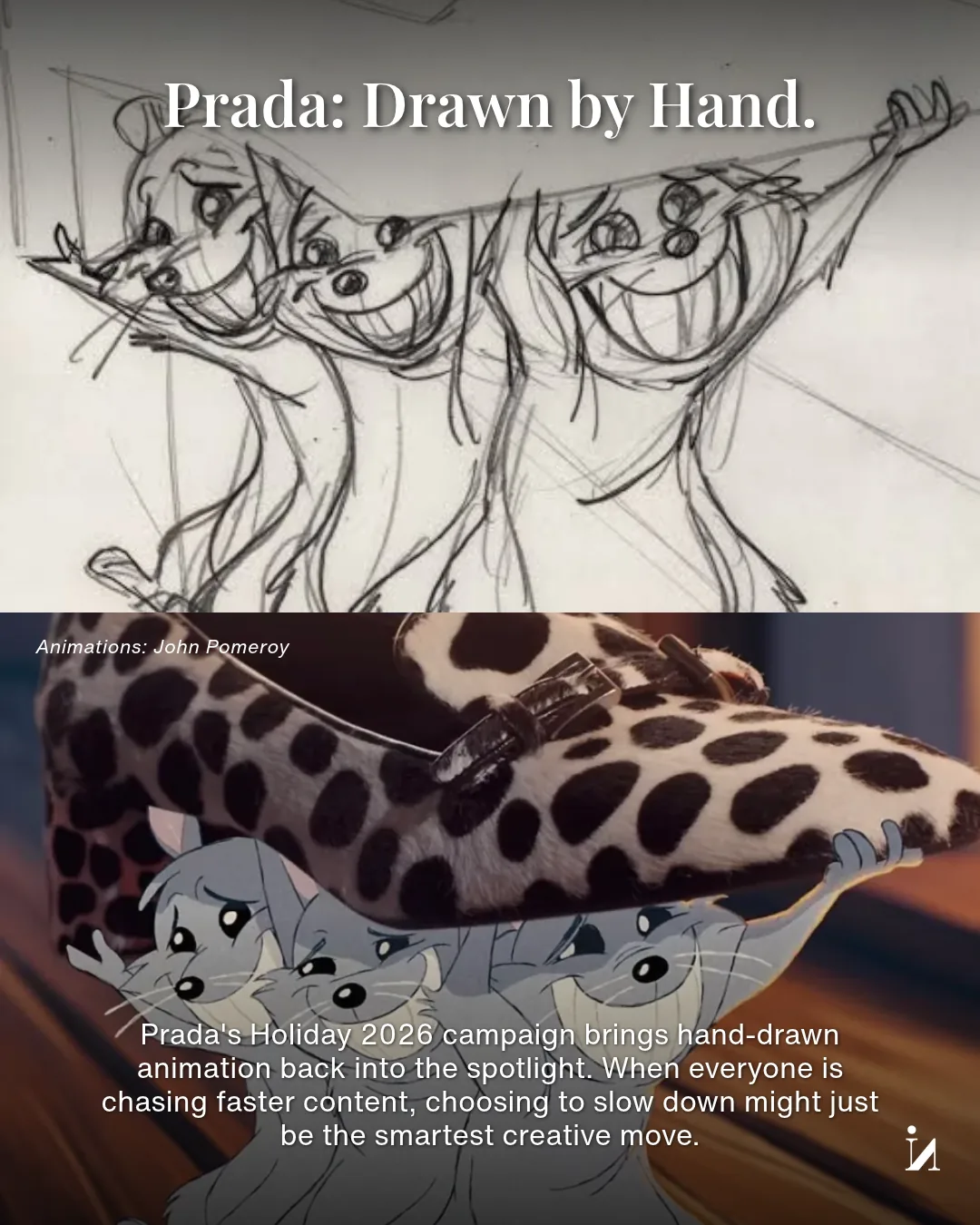
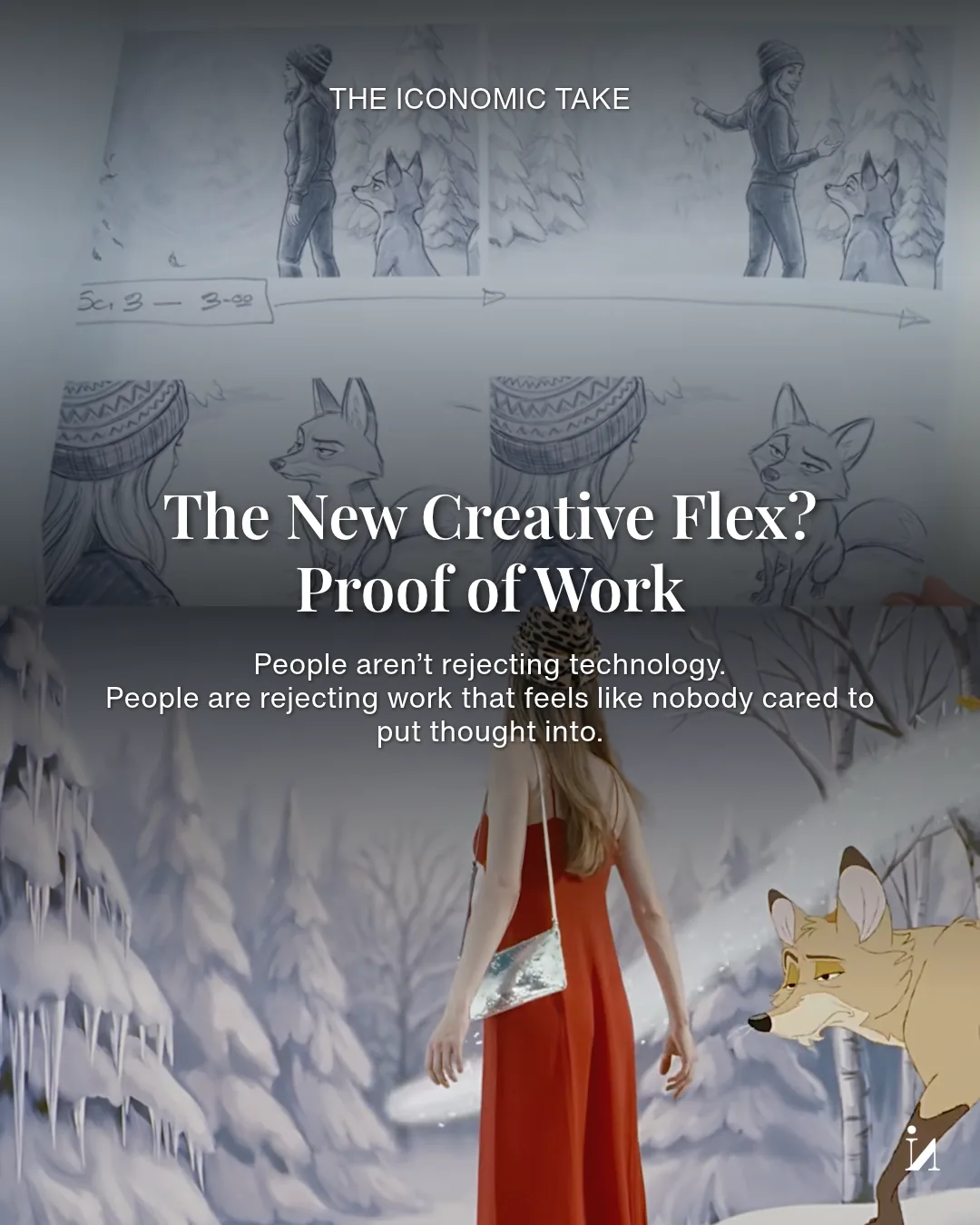
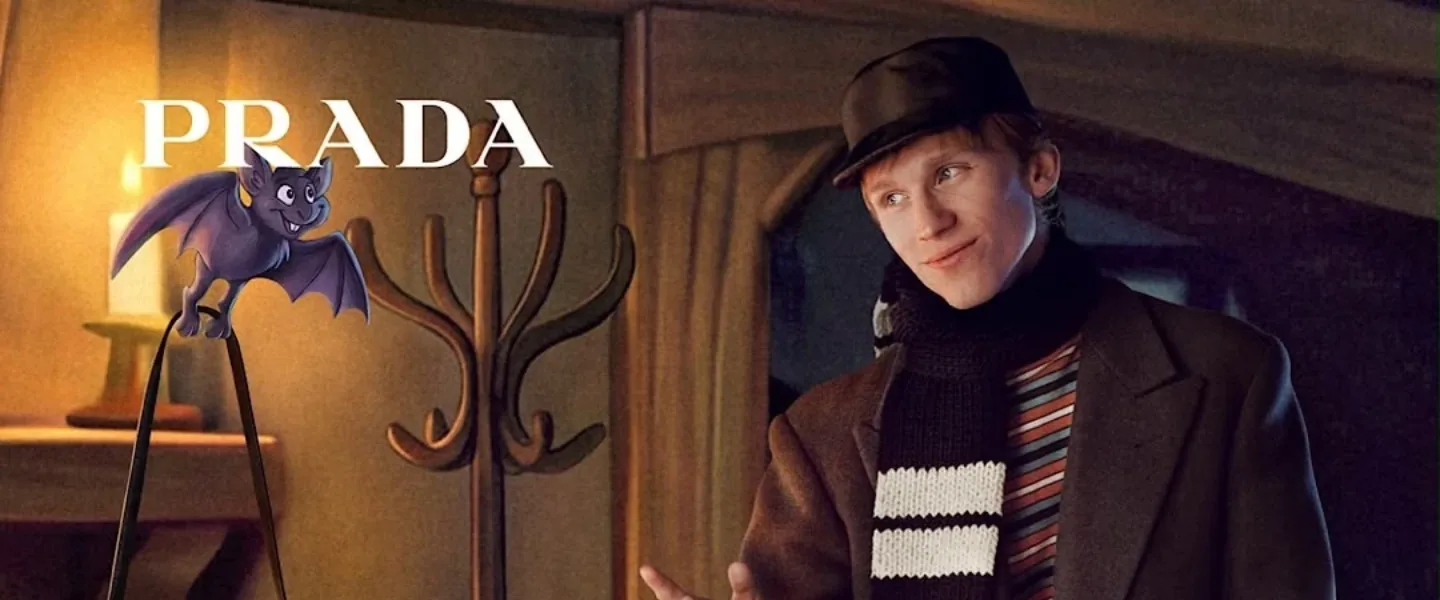
Prada’s Holiday 2026 campaign, Drawing Prada: Animated by Hand, puts live action and hand-drawn animation side by side. Glen Luchford photographed and directed it, with animation direction by John Pomeroy, whose credits include The Secret of NIMH and Disney’s Pocahontas. Sadie Sink, Maya Hawke, Kelvin Harrison Jr., Chen Haoyu and Luther Ford share the screen with animated mice who make off with a shoe. When everyone is chasing faster content, choosing to slow down might be the smartest creative move.
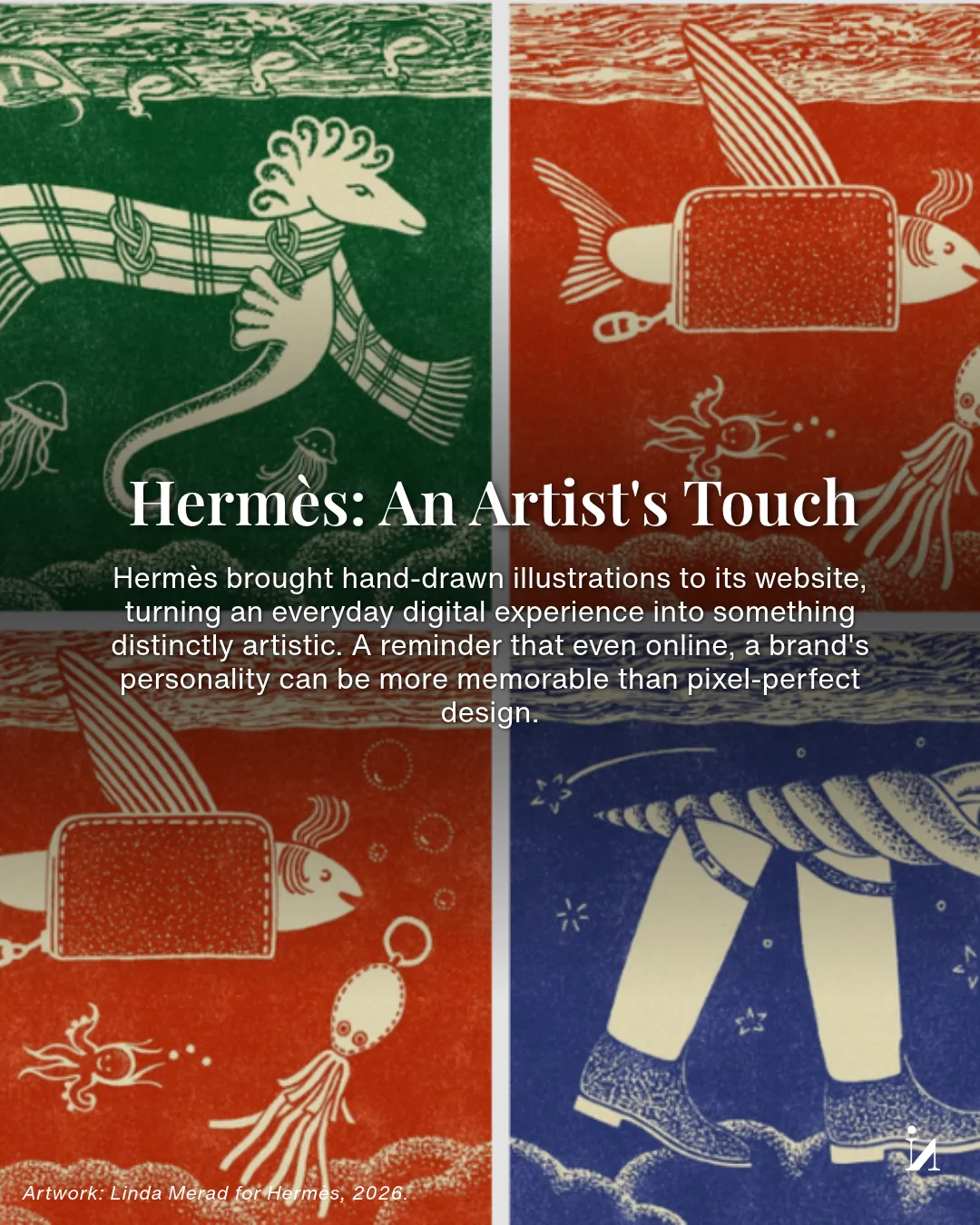
In early 2026, Hermès relaunched its website with hand-drawn illustrations by French artist Linda Merad, made for the house’s theme of the year, Venture Beyond (L’appel du large). Her lithography-inspired drawings of sea creatures and journeys turn an online shop into something closer to a picture book. A reminder that, even online, a brand’s personality can be more memorable than pixel-perfect design.
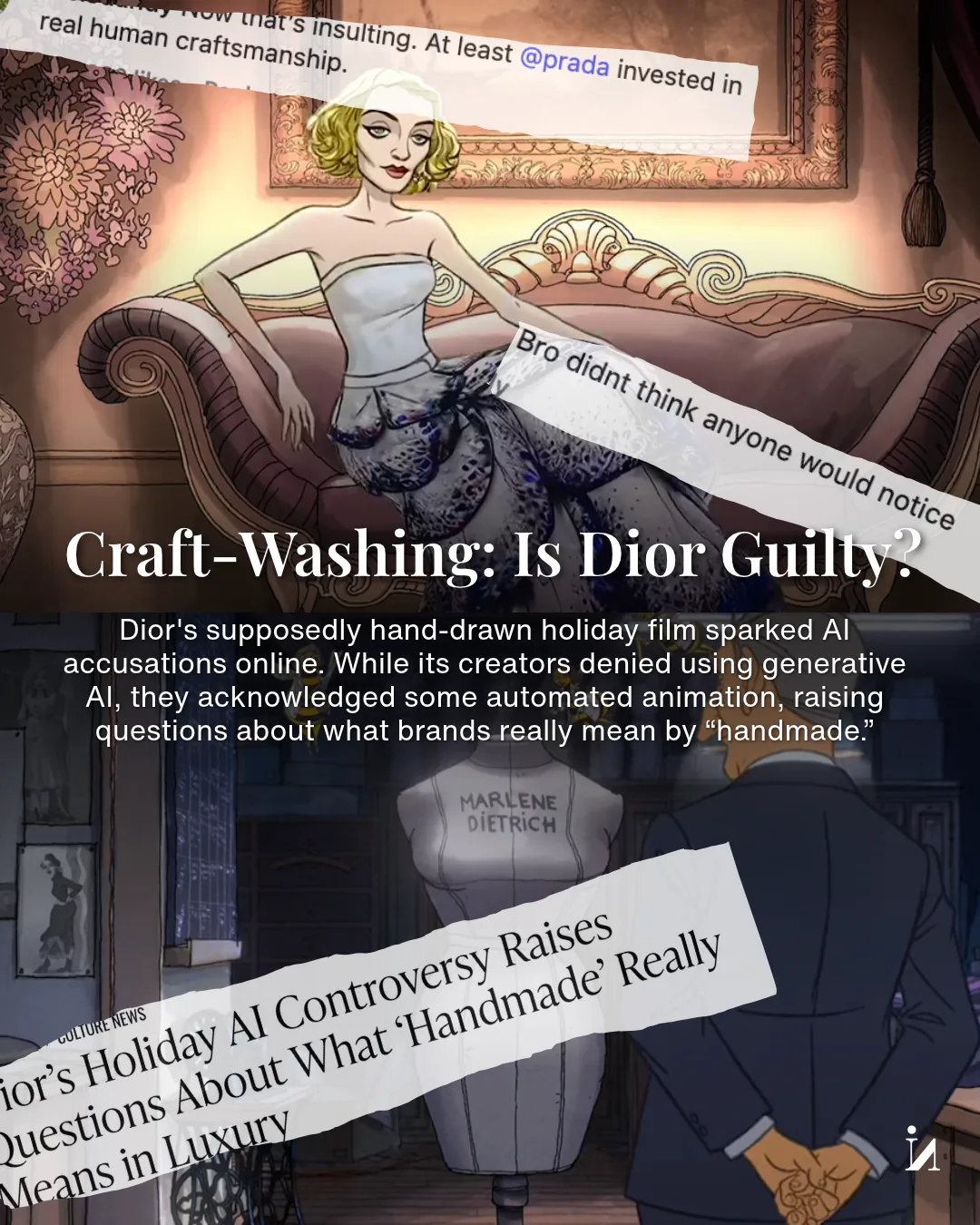
Dior’s holiday film, Christian Dior’s Night in Color, was released on 4 November. Directed by Sylvain Chomet (The Triplets of Belleville), it is set in the winter of 1949 and inspired by Christian Dior’s friendship with Marlene Dietrich. Within days, viewers claimed to spot signs of AI, such as a hand with six fingers. Chomet denied using generative AI but acknowledged that some frames were filled in with automated interpolation; the producer said the film took seven months and was drawn by artists.
So is Dior guilty of craft-washing? On the evidence, no. A film drawn by artists over seven months, with some automated in-betweening, is still a hand-drawn film. But the row shows what has changed: “made by hand” is now a claim a brand has to be able to prove.
Luxury has always sold time: the hours in a stitch, a setting or a hand-painted scarf. When an image can be generated in seconds, visible human effort becomes the scarce thing again. That is why these campaigns land. They are not rejecting technology; they are showing that somebody cared enough to put thought into the work.
Proof of work is the new creative flex. People aren’t rejecting technology. They are rejecting work that feels like nobody cared. But if brands turn the human touch into just another aesthetic to imitate, they have missed the point entirely. We want more actual creativity, not better ways of pretending it happened.
Did Dior use AI in its holiday 2026 film?
Director Sylvain Chomet denied using generative AI. He acknowledged some automated interpolation between drawn frames, and the producer said the film took seven months and was drawn by artists.
Who animated Prada’s Holiday 2026 campaign?
John Pomeroy led the animation for Drawing Prada: Animated by Hand, which Glen Luchford directed and photographed.
Who illustrated the Hermès website?
French artist Linda Merad, for Hermès’ 2026 theme, Venture Beyond.
What is craft-washing?
Presenting work as handmade or artisanal for its marketing value when the claim doesn’t hold up. Think of it as the craft version of greenwashing.